George Silver - English Backsword part 3 - 10 general lessons
This is an interpretation of George Silver's “Brief instructions” work, incorporating aspects of his “paradoxes” work.
10 general lessons
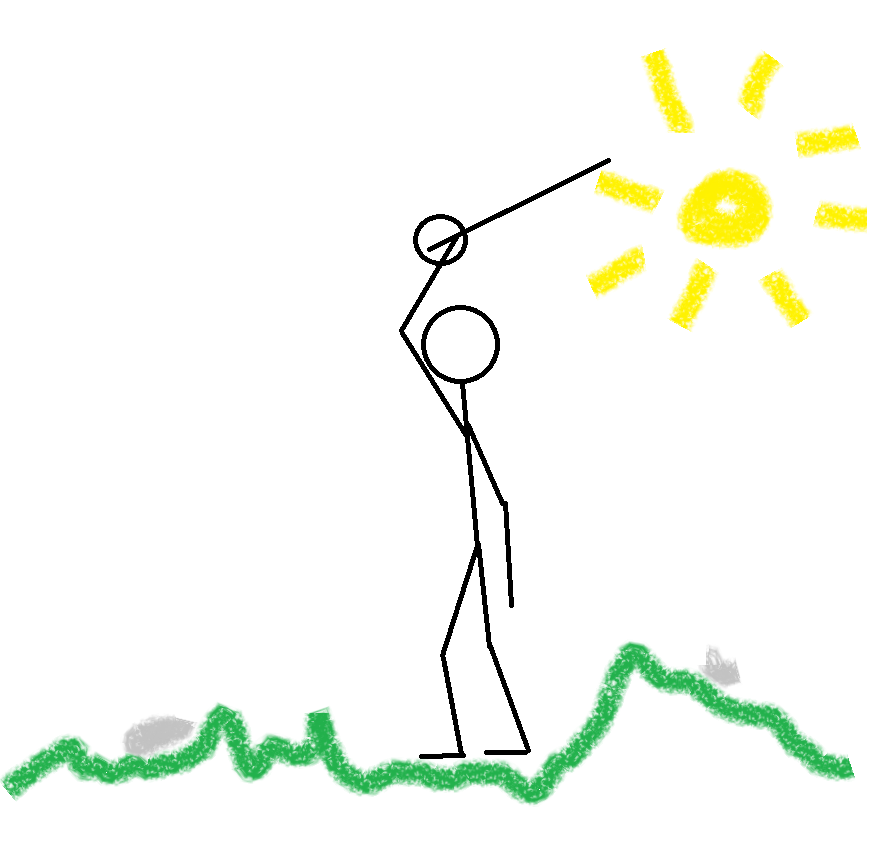
Lesson 1: be aware of the ground around you. Use the terrain to your advantage. Get the sun behind you and in the opponent's face.
Lesson 2: consider the guard your opponent is in and make sure you are guarded in whatever way you feel is appropriate. Make sure that no part of you - leg, arm, hand, head, etc. - is close enough to the opponent that they can hit it without needing to take a step or two forwards. Some consider this to mean that all body parts are aligned, i.e. the hand is no closer to the opponent than the arm (this is why many people keep the hilt directly above the head in true guardant). However, it can also mean that, when you are in a position with the hand further forwards, your distance to the opponent is measured from the hand, not the head.
Always maintain this distance so that if your opponent does step in towards you, you have three options:
Cut or thrust at him as he comes in (winning you the place)
Parry and riposte (which you can do in time of the hand to his time of the hand and foot)
Slip backwards and cut or thrust at whatever body part you can reach (often the arm)

Lesson 3: don't let your opponent gain the place of you, so make sure he always needs to step in to hurt you, otherwise his attack will be too fast for you to defend in time (as he will be acting in time of the hand). However, when you are engaged in a bind (and so may be in a time of the hand distance), you can typically still defend yourself and this is basically because your space is typically narrow or true: or in other words, your sword is close to theirs, and they may need to cut around your sword to attack you, which gives you time and space to act. So, we don't only need to think about distance and time (time of hand, foot etc.) but also space - where our sword is positioned, and how far we need to move it to defend ourselves. Silver's term True space is presumably about adequate positioning of our sword.

Lesson 4: when your opponent presses you - comes forwards - then you should attack them where they are open or where they are weak in their guard.

Lesson 5: Go forwards with a mind to go back: when you attempt to win the place - presumably meaning you need to go forwards - then do so on guard. (I take this to mean that we are blocking their shortest attack with our sword.) But remember that as you press in to attack you must also retreat instantly. Or, if your opponent presses in and wins you the place, strike at them as they come in and retreat. Either way, you must retreat as or after you strike, and the first steps of the retreat are usually faster than the opponent's advance (but your opponent will eventually catch you up!).

Lesson 6: if your opponent is fighting variable and so is pointing their sword at you, then keep your distance and strike at their arm or wherever is nearest as they come in with their attack. Presumably, attacking someone in variable to a deep target is dangerous, as they can stab you and you may not reach them.

Lesson 7: don't stand around in variable fight within distance as you will both likely stab each other in time of the hand.

Lesson 8: look at your opponent's hand/guard position. If they attempt to slip back (and presumably attack you if you attempt to enter to win the place with an attack in the time of hand and foot), quickly form whatever guard position you can to defend against their counter cut. Defend this and then riposte, remembering to fly out afterwards.

Lesson 9: if you can get your opponent offline so that they need to turn their body back towards you to defend or attack, you can attack them as they need to move their feet to do anything, and so will be too slow.

Lesson 10: whenever you defend against a thrust or cut, whether on the left or right side, always step circularly away from their attack, presumably with your back foot. This puts you in a better position to return an attack.


Comments